Once a player knows the rules and the hand rankings, almost all of their attention goes to one thing: trying to hit cards.
Ask a Stage One player why they lost, and the answer is always the same — the cards didn’t come. “At the end of the day, you need cards to win. If the cards don’t hit, what can you do?” It sounds like common sense. It is also the single belief keeping them from ever winning.
The mind of a Stage One player
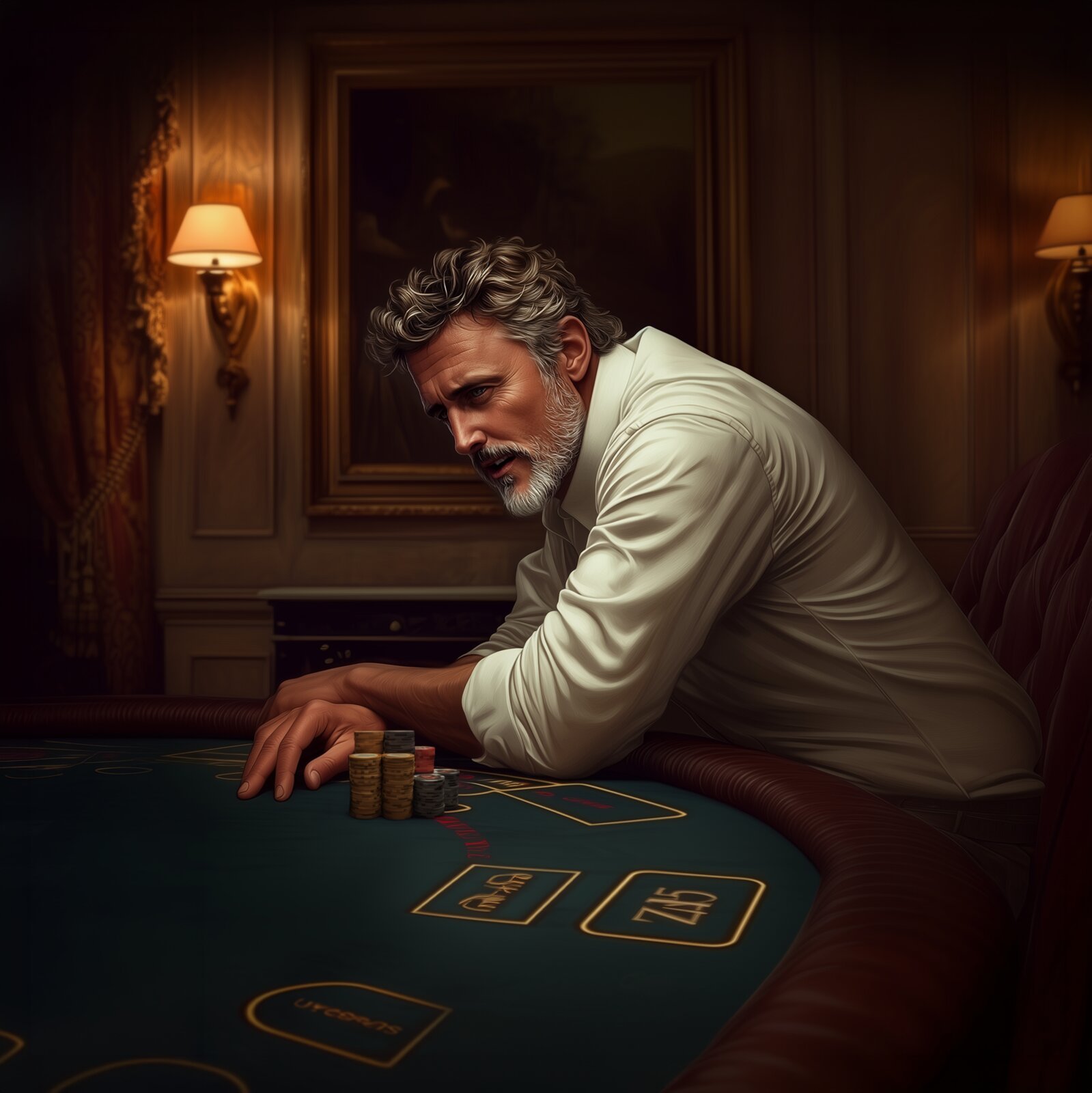
A player in this stage feels the pull of the cards in everything. The symptoms are easy to spot:
- You focus on the hitting and missing of cards — and therefore on luck.
- You keep track of your luck: good days, bad days, which dealer is “good” for you and which one isn’t.
- You decide whether to play a hand based on a feeling about whether your cards will hit.
- When you lose, you talk about the cards that didn’t come.
Underneath all of it is one conviction: win or loss depends on the cards, and therefore on luck. To a player who believes that, discussing strategy feels pointless. If the cards decide everything, what is there to plan? So he waits, and hopes, and tells himself: let me try my luck.

Making progress
Progress begins the moment you stop guessing and start calculating.
You learn to count your outs. You work out the odds of completing a straight or a flush. You see that not all draws are equal — some are worth chasing, most are not. Where you once chased every draw hoping to hit, you now fold the ones the math doesn’t justify.
The shift is quiet, but it changes everything. Before, you called on a hunch that the card would come. Now you calculate, and you call only when the odds are there. And when you fold and the card would have hit, you feel no regret — because you know you made the right decision.
Signs of mastery
You reach the end of Stage One when the mystery disappears.
You can read the strength of any hand and work out its odds without thinking. You understand that cards obey mathematical probability over the long run — that hitting and missing are not fate, not personal, just variance. Luck, you finally see, behaves like the wind: some days it’s at your back, some days in your face, and no amount of worrying changes its direction.
Poker is like flying a plane
This is the idea I want you to carry out of Stage One.
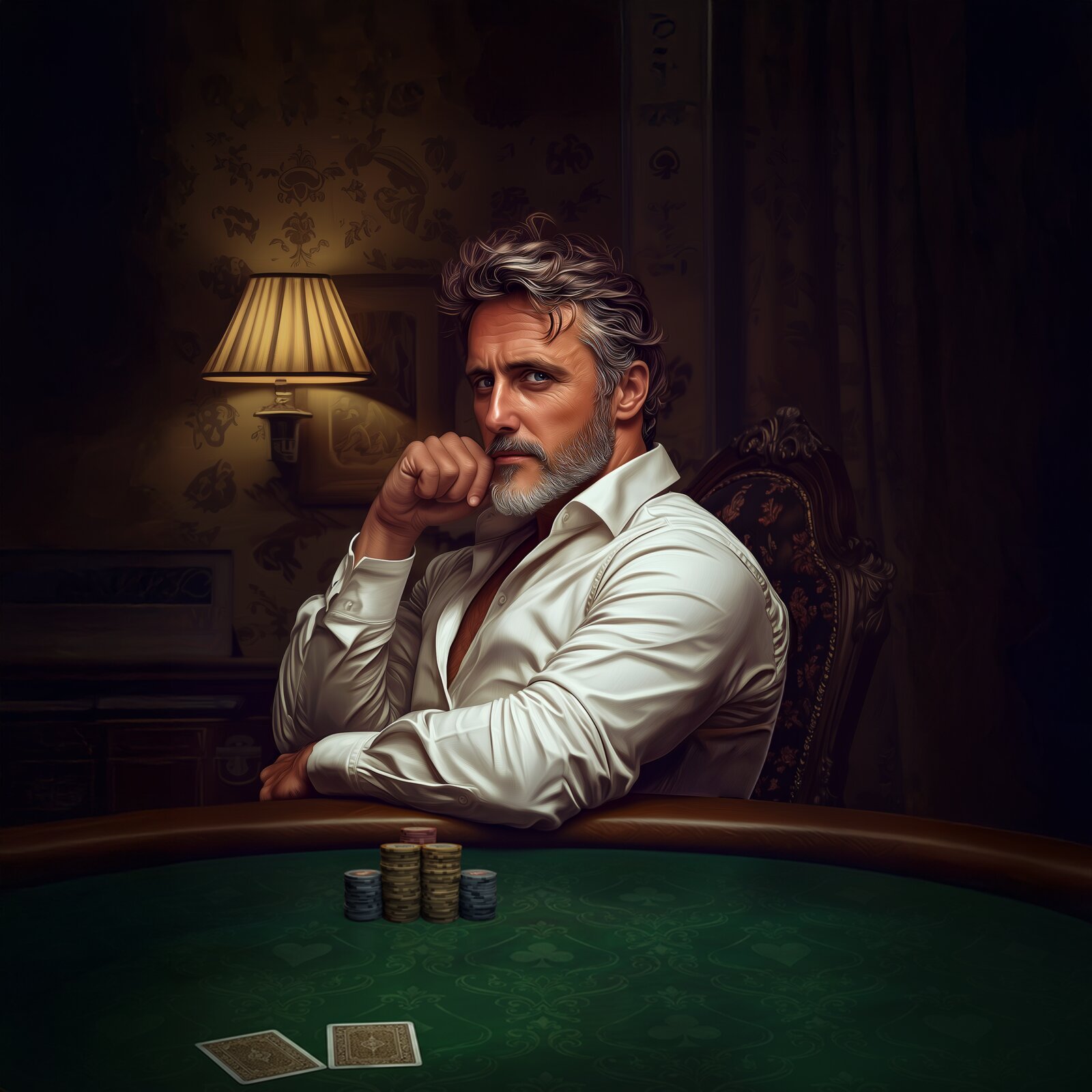
Your skill is your engine. Luck is the direction of the wind.
When you first sit down at the table, you have no skill. You are a glider with no engine. The wind throws you left and right and you feel helpless — so you fixate on it. “Let me try my luck,” you say, because luck is all you have.
Then you start to build skill, and skill is engine power. The more power you add, the less the wind matters. The greatest players are fighter jets: so much thrust in their engines that the wind is irrelevant. They carve through the clouds and barely feel it.
Obsessing over whether your cards hit is obsessing over the direction of the wind. It is a complete waste of time — because you cannot change the wind. The only correct response is to pay it no attention and add power to your engine.
Listen to how players talk and you can place them instantly. Losing players talk about the cards — whether they were running good or bad that night. They are describing the wind. Winning players talk about how they played the hand, and what they might have done differently. They are describing how to add power to the engine.
So at this stage, there is only one question worth asking:
How can I become so skilled in poker that I never have to worry about luck again?
That question is the doorway out of Stage One. In Stage Two, I’ll show you the proof that — roughly 84% of the time — whether your cards hit doesn’t matter at all.